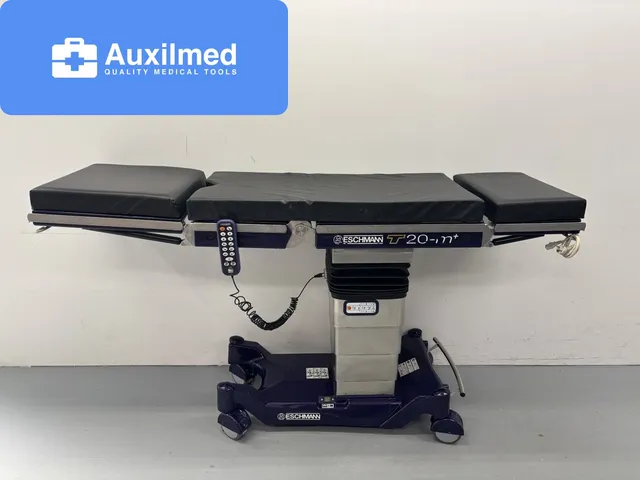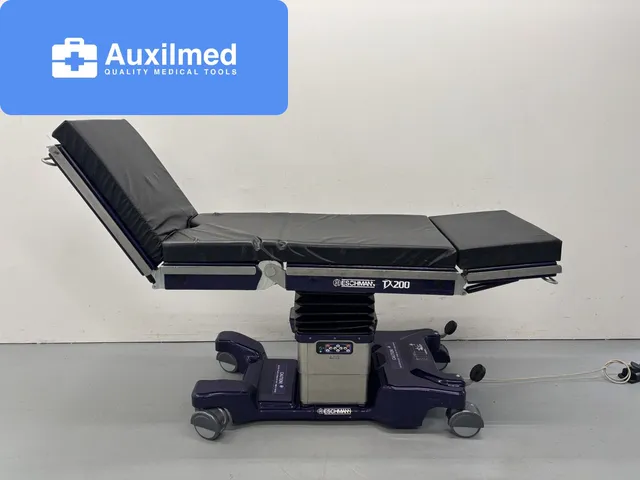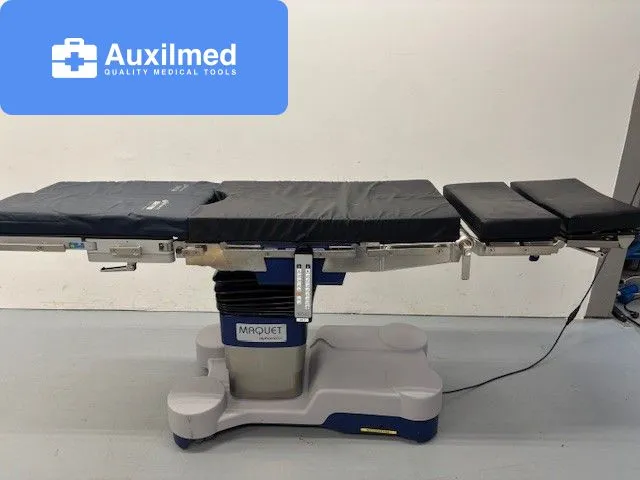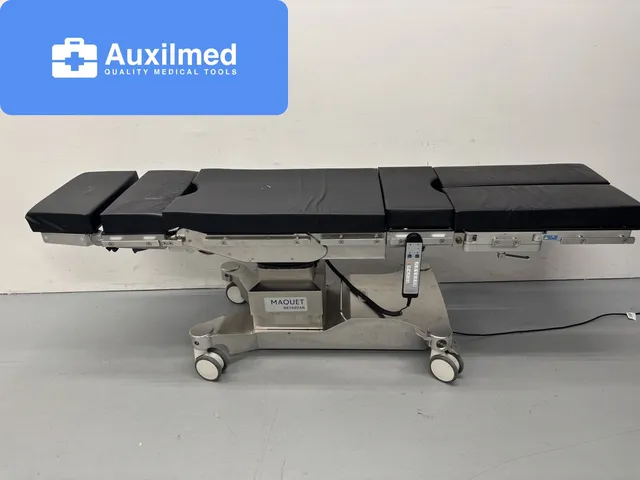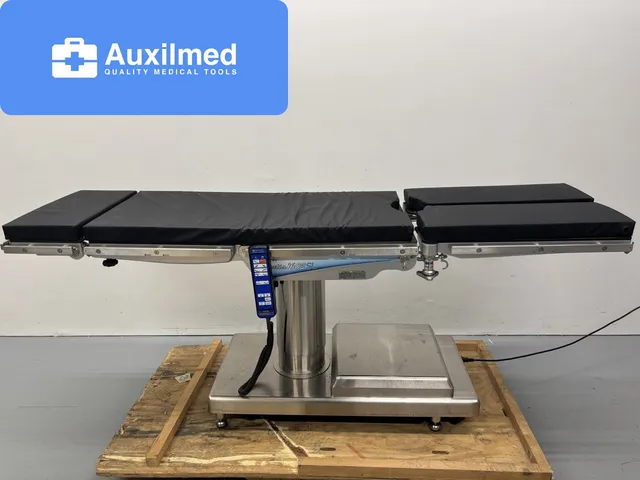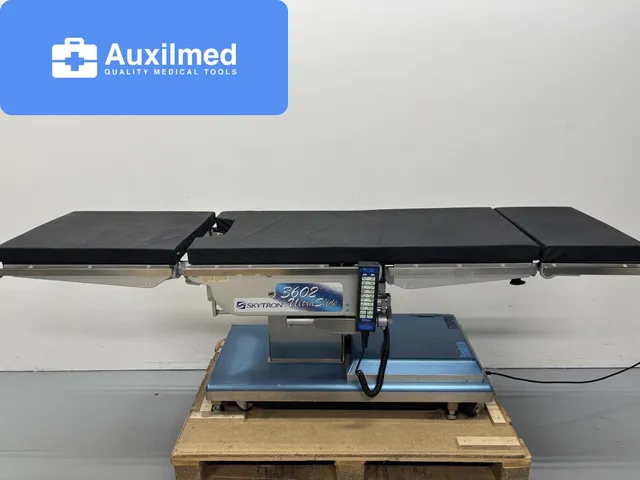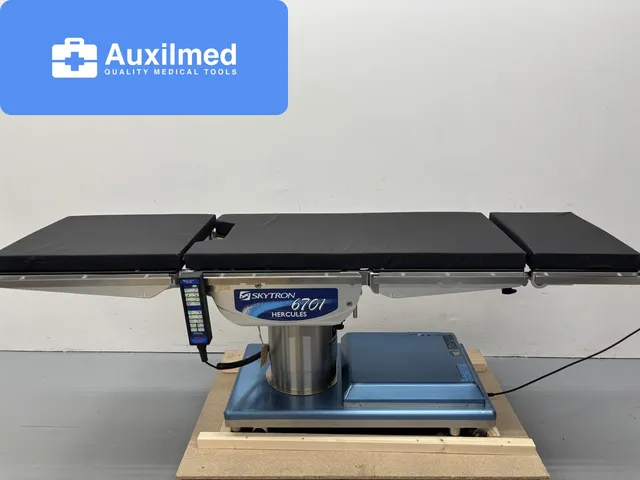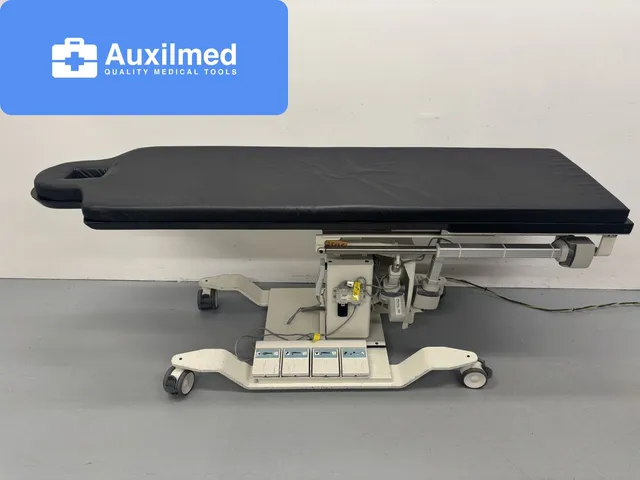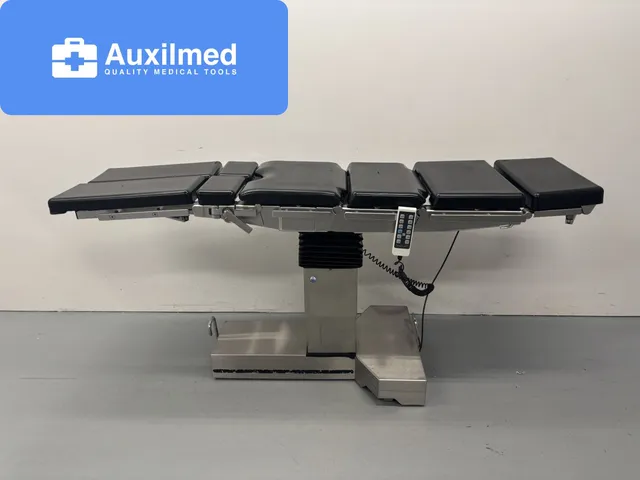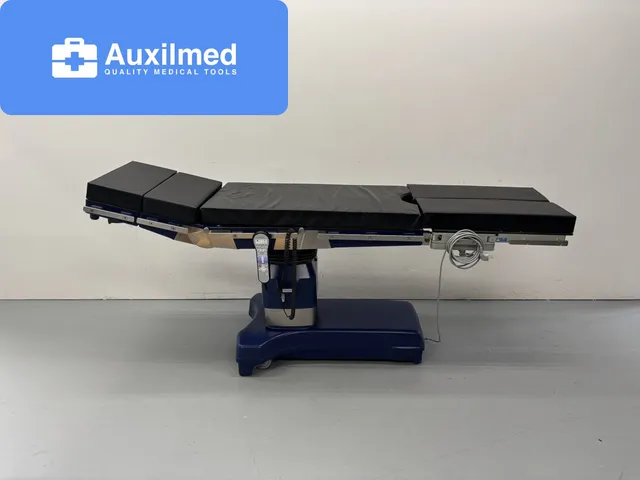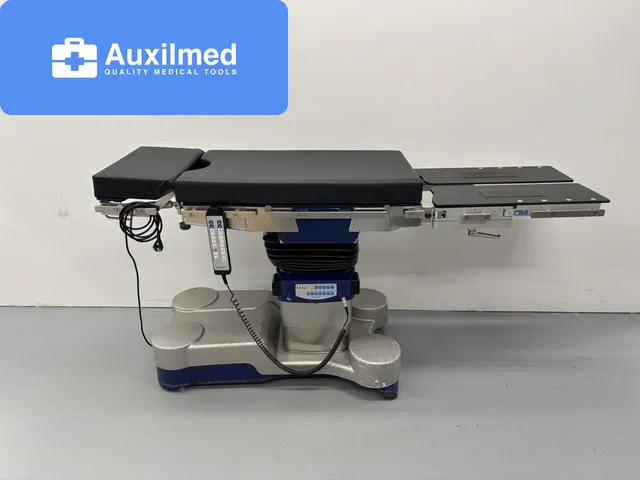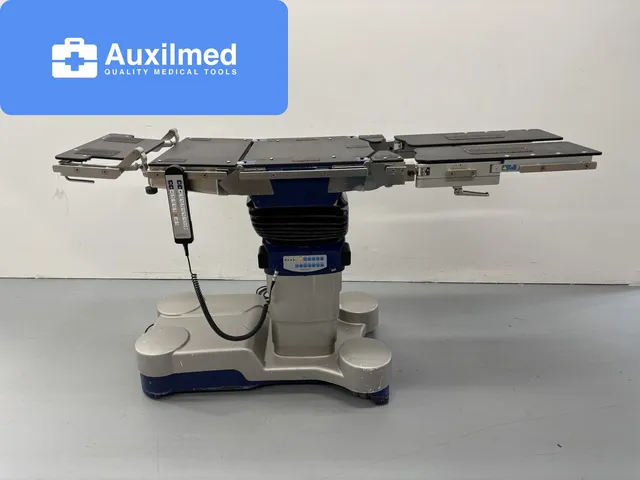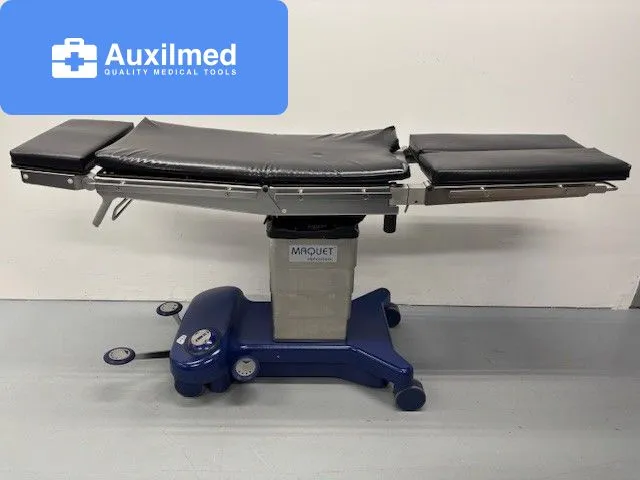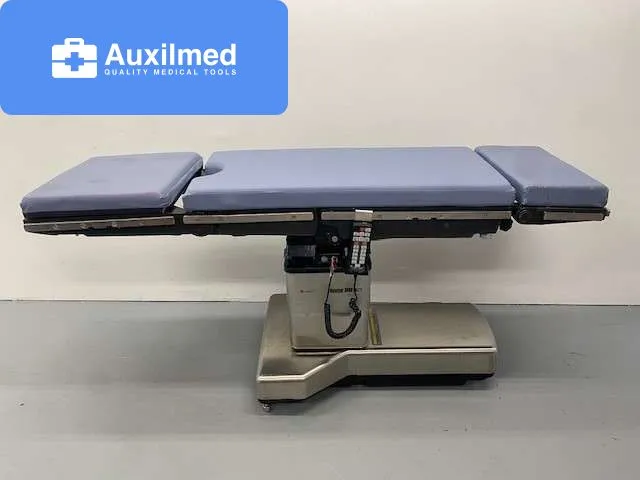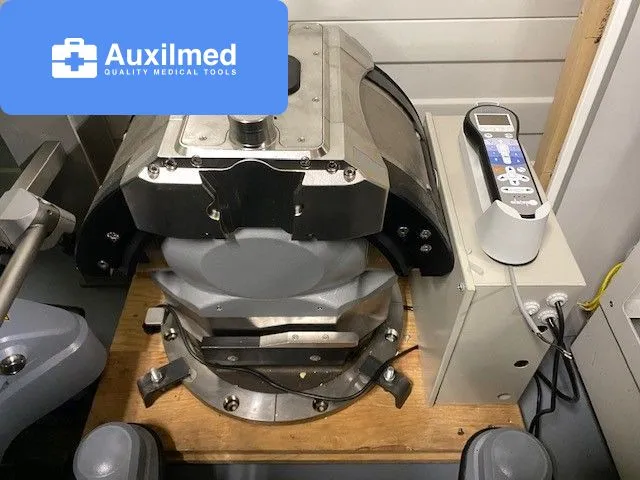
Operating tables set patient position, imaging access and working height for the entire theatre team, so the table constrains what the room can be used for. Roughly 15 pre-owned tables are listed: mobile general-purpose tables, column systems with interchangeable tops, and smaller procedure tables. They typically come out of Dutch hospitals during theatre refurbishment. Each table is tested for functionality, with model, serial number, year of manufacture and condition documented.
Mobile tables are self-contained, roll between rooms and need no building work, which makes them the default for day surgery, smaller theatres and rooms whose use changes. Column systems keep the base in place and swap tabletops on a transfer trolley, which raises throughput in a busy suite but ties you to installation, a fixed position and a set of matching tops. Decide on this before comparing individual listings.
| Factor | Mobile table | Column system |
|---|---|---|
| Installation | None beyond commissioning | Positioning and fixing, often floor-mounted |
| Turnaround | Patient transferred on the table | Tabletop swapped on a trolley between cases |
| Flexibility | Moves between theatres | Fixed location, interchangeable tops by speciality |
| What to source with it | Mattress, rails, clamps | Tops, transfer trolley, mattress sets |
Four figures do most of the work: safe working load, height range, the length and position of the radiolucent section, and the movement set. Read the safe working load carefully: manufacturers state it differently for a static patient, a fully articulated table and reversed orientation, and the reversed figure is usually lowest.
Concentrate on the column, the actuators and the pads, since these carry the wear. Cycle every movement through full travel, watching for hydraulic weeping at the column, listening for actuator noise and checking that the table holds position under load. Then examine the parts that touch patients.
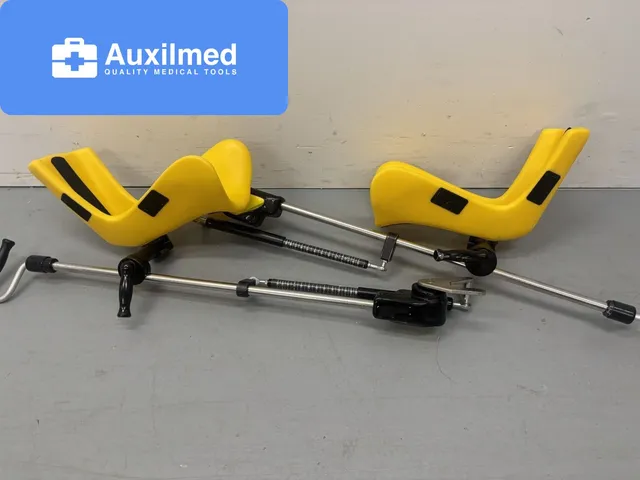
Accessories are the most common budgeting mistake in a used table purchase. Side rail cross-sections follow different national conventions, so a clamp built for one profile will not grip another, and even where the rail fits, arm boards, leg holders, headrests and extension sets are engineered around one manufacturer's mounting. Mattress sets are cut for a specific tabletop and its section joints. Treat accessories as part of the decision: list what each speciality needs, then confirm which items are physically present with that table.
It varies by table, because each one arrives in the configuration in which it was decommissioned. The listing records what is present, and the condition notes cover the pads. Quote the item reference to Auxilmed and ask specifically about mattress sets, rails, clamps, arm boards and the handset before you order anything separately.
That depends on the tabletop rather than the base. Check the length of the radiolucent section, where the column intrudes under the top, whether the top slides longitudinally, and the clearance for the C-arm to rotate. Compare those dimensions with your imaging system's own geometry before committing to a table.
Tables are moved in custom-built wooden crating, with rigging arranged where a unit has to be moved inside a building. Auxilmed handles worldwide shipping by road, sea or air, export documentation, customs and delivery to your address. De-installation and installation can be arranged on request.