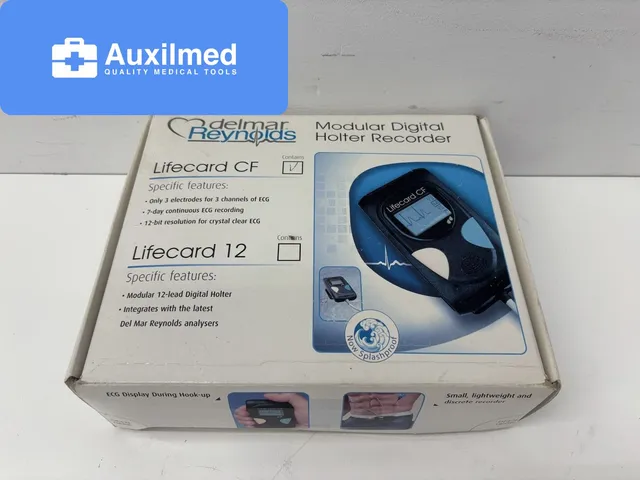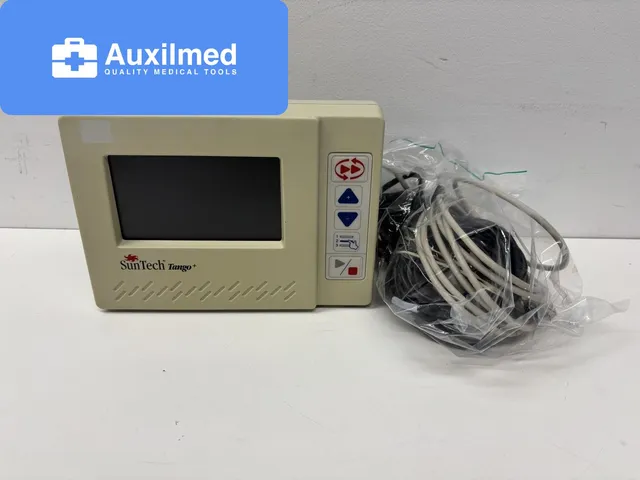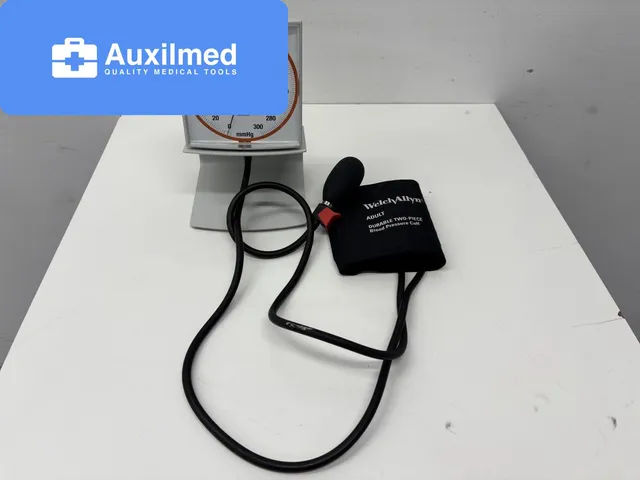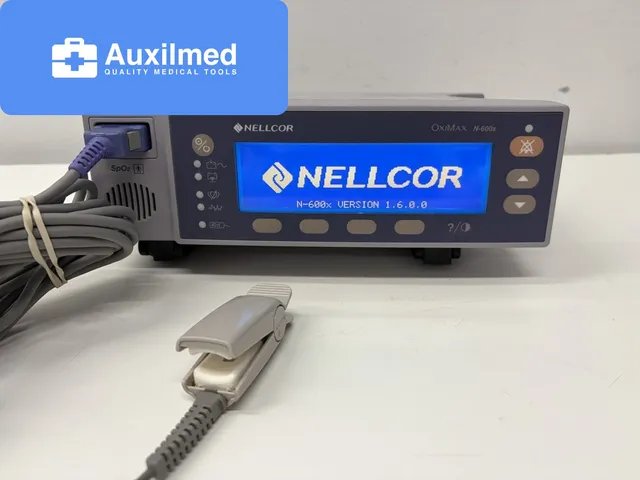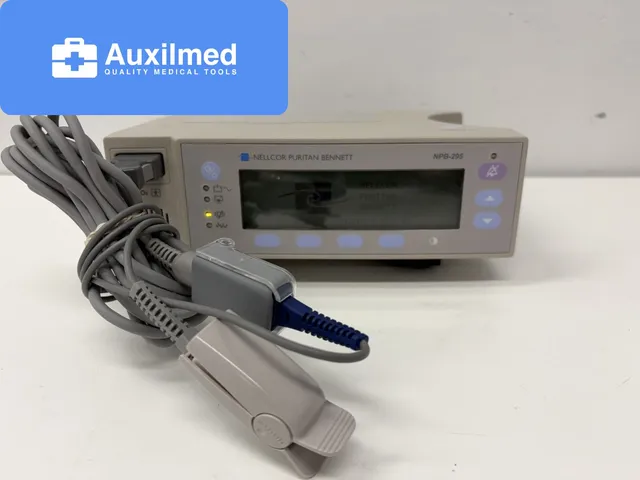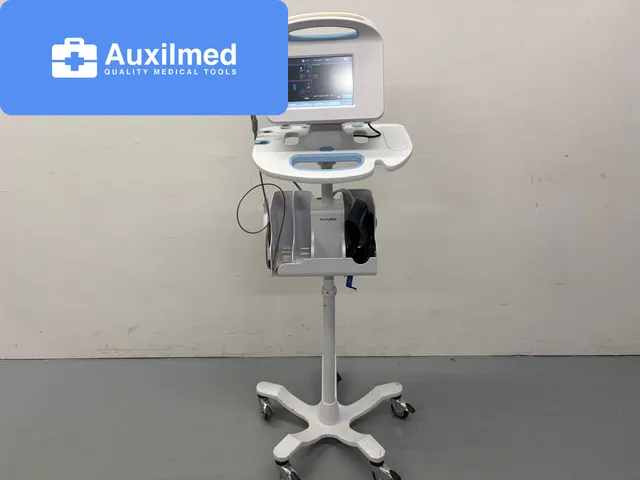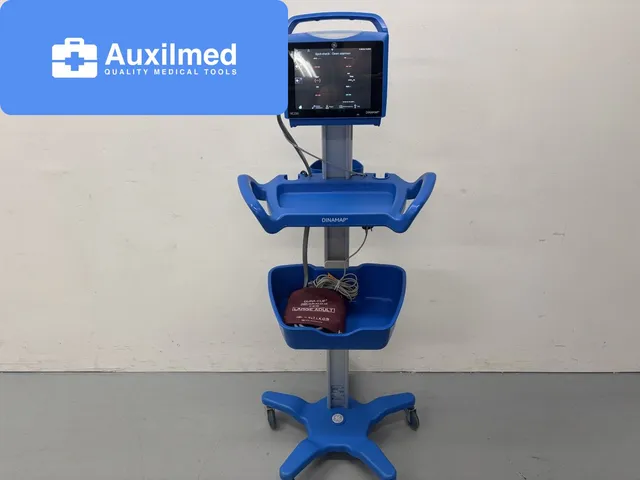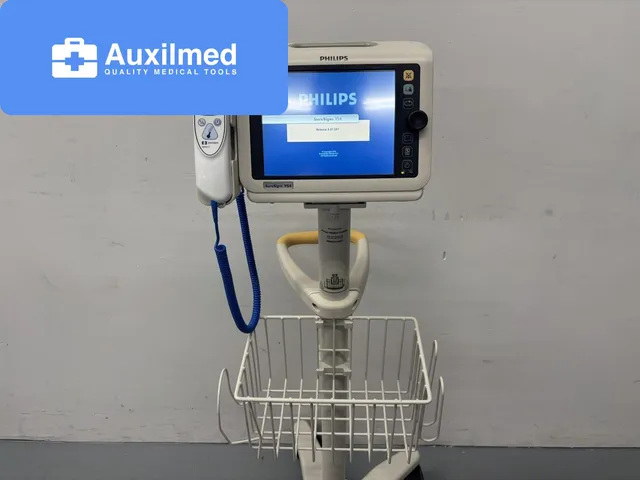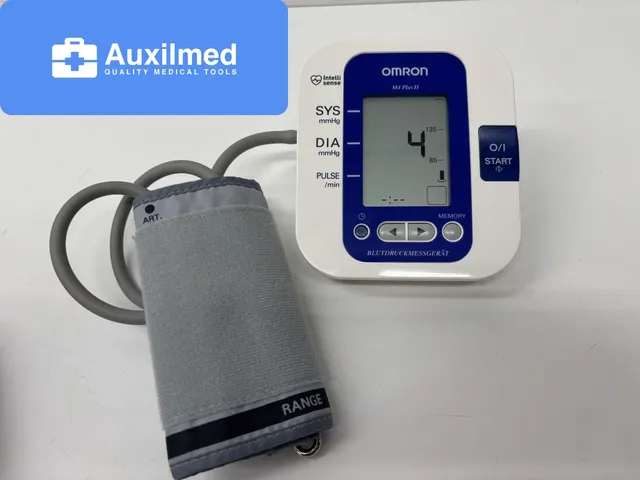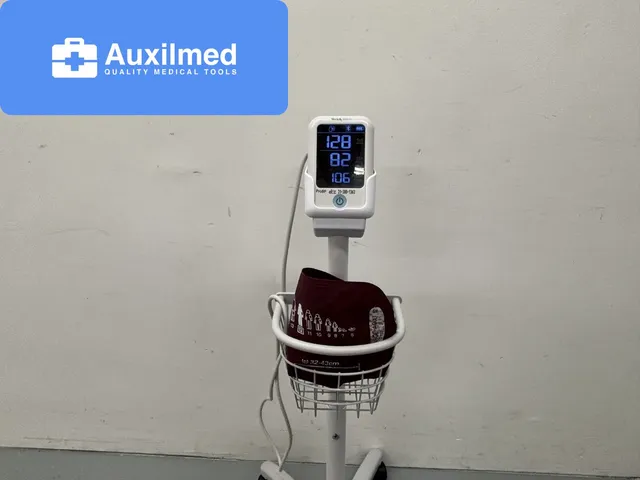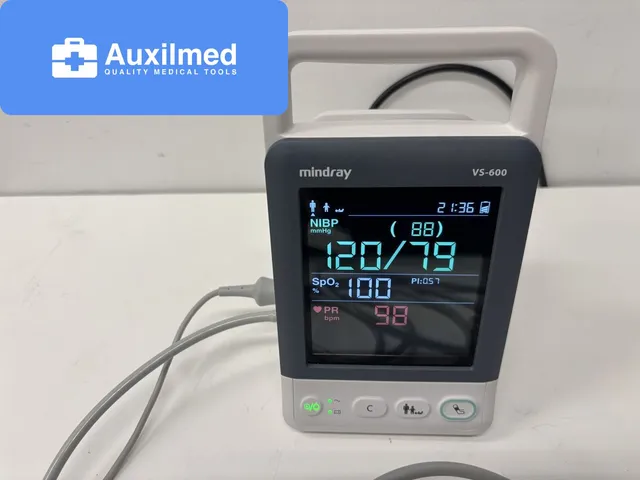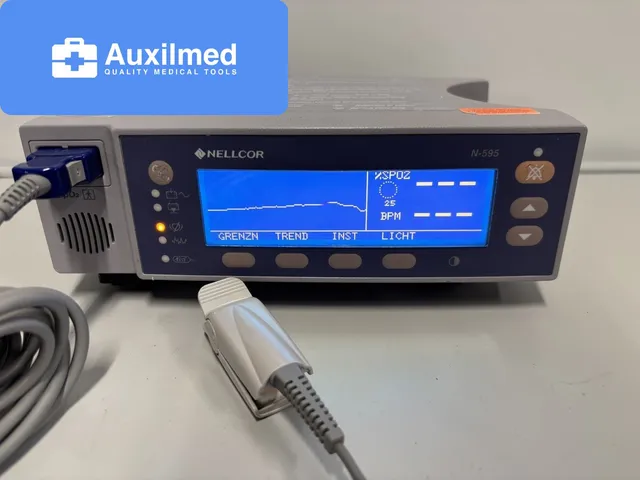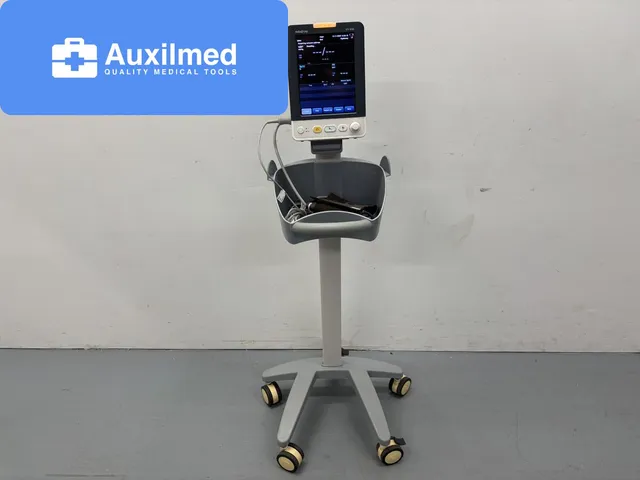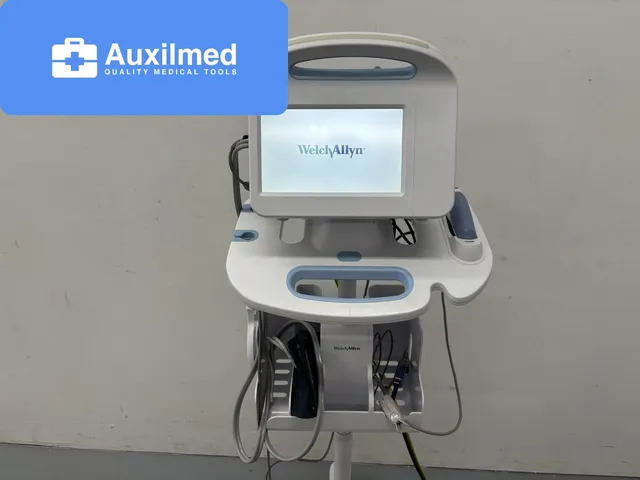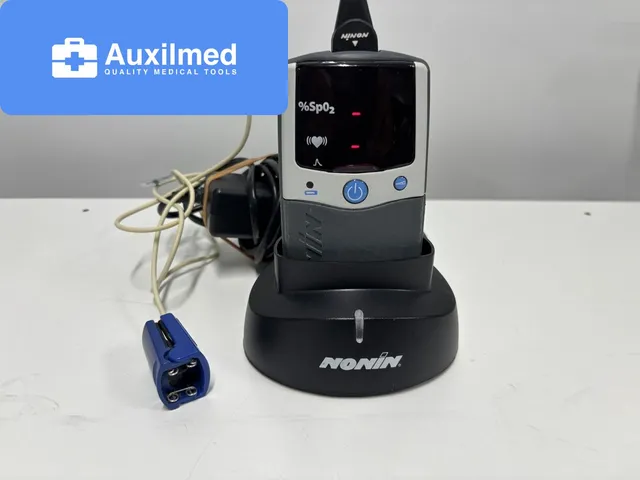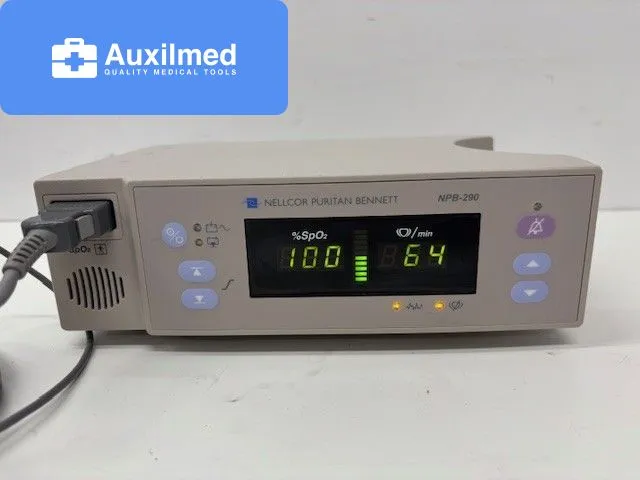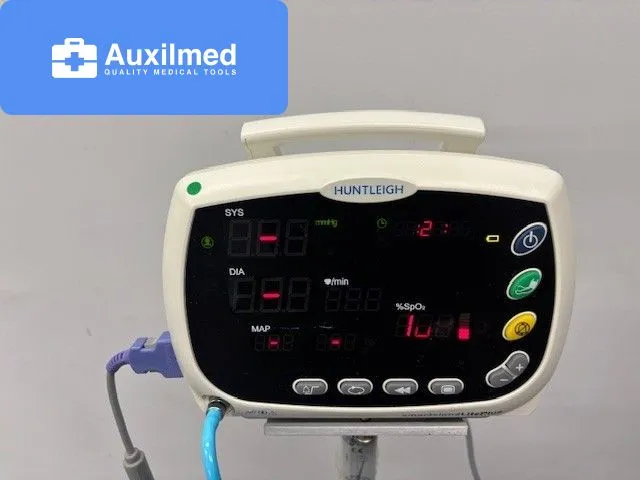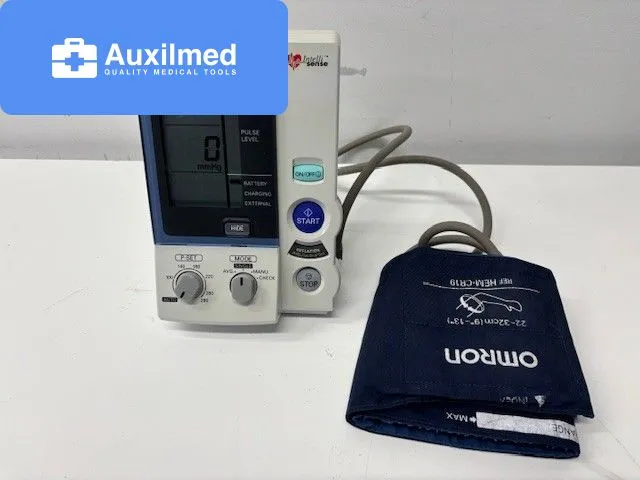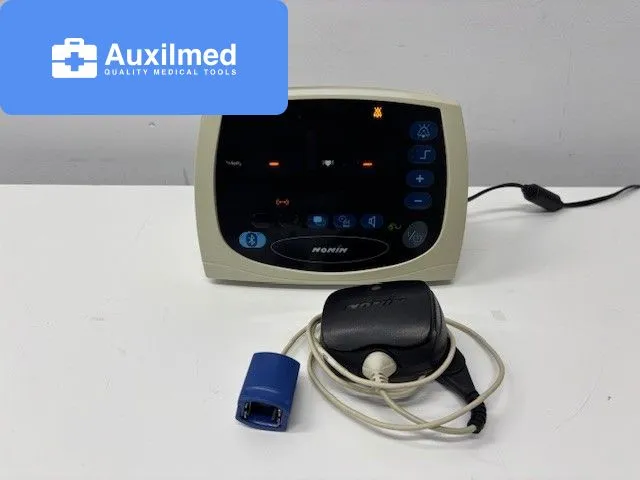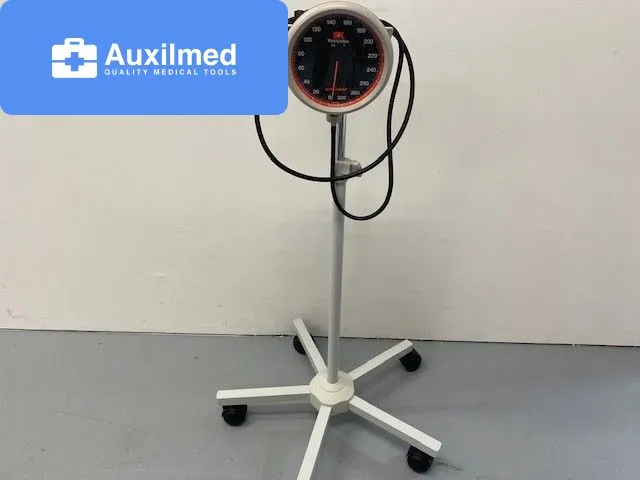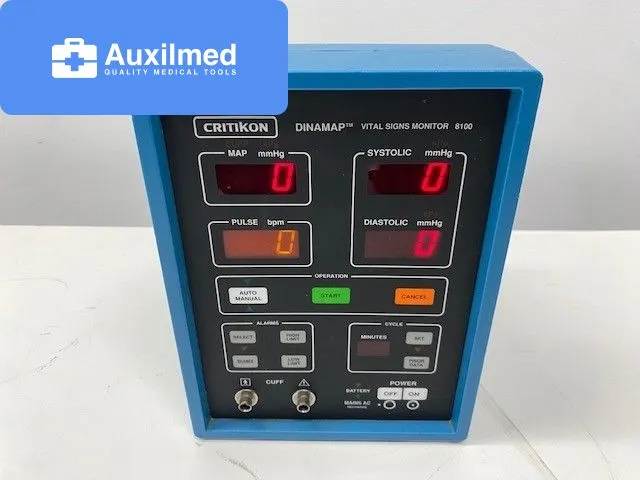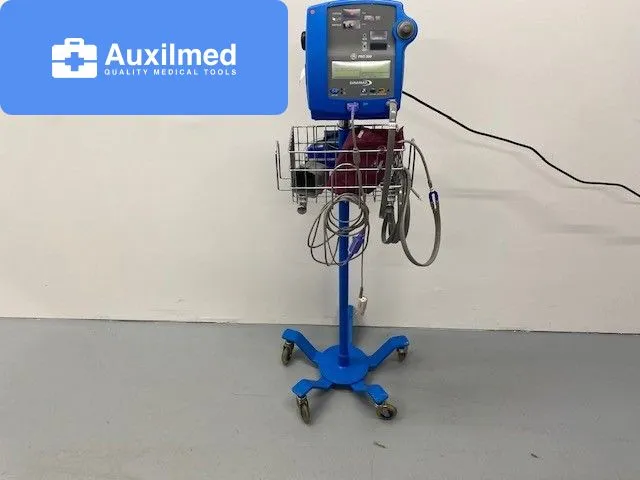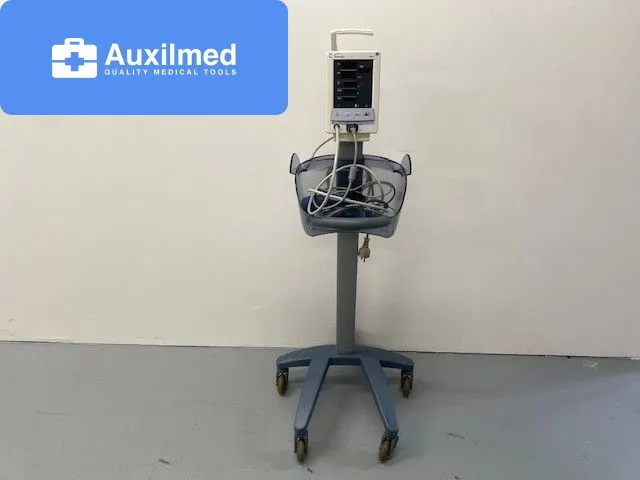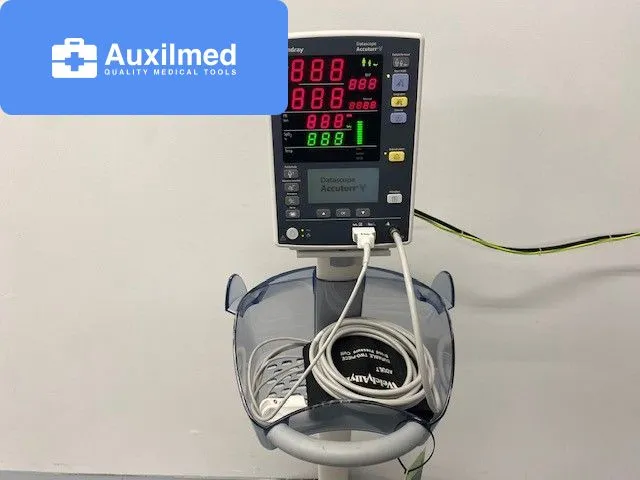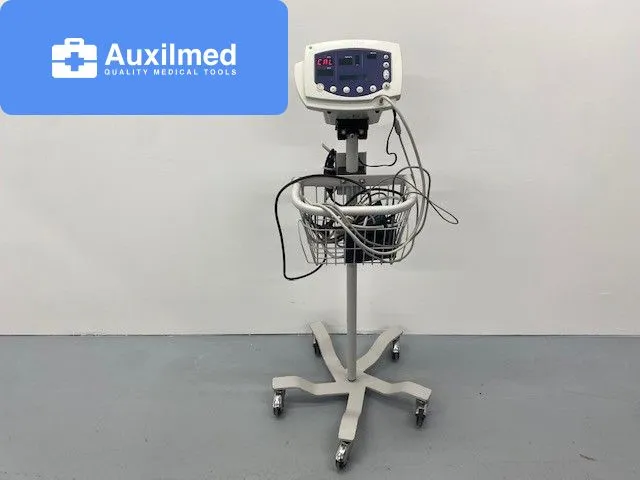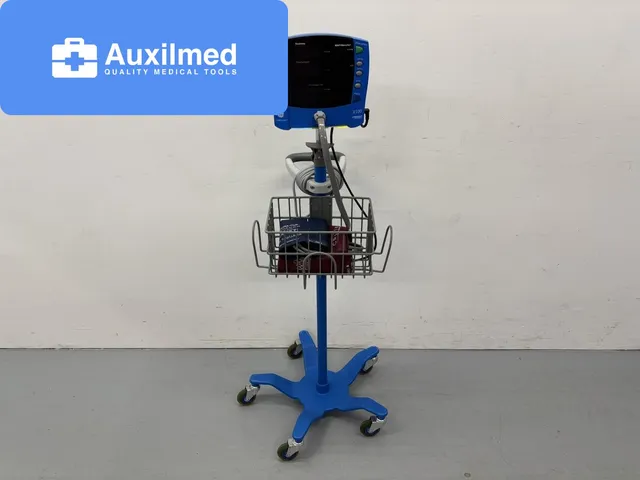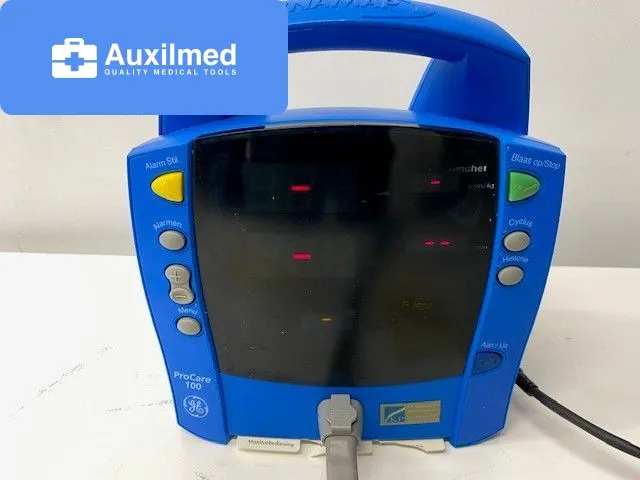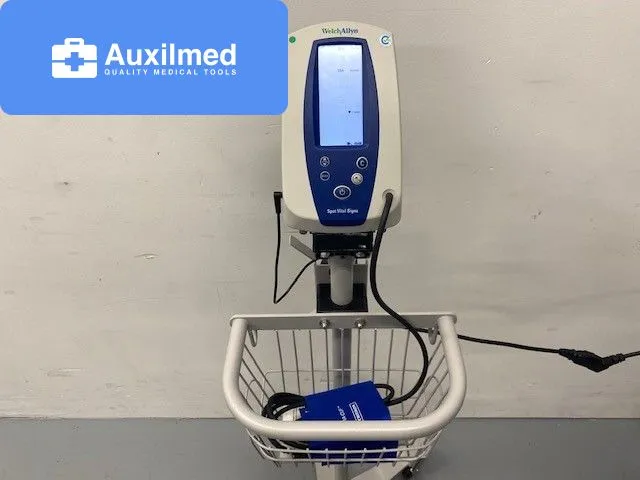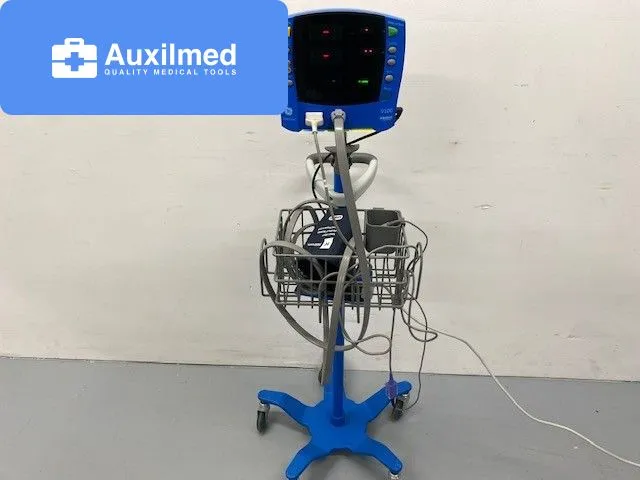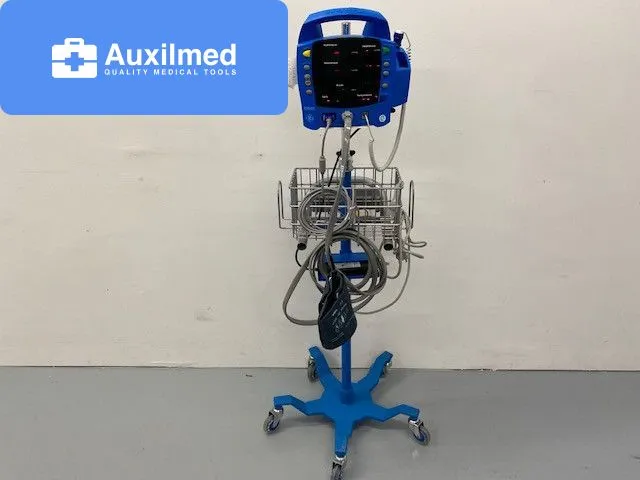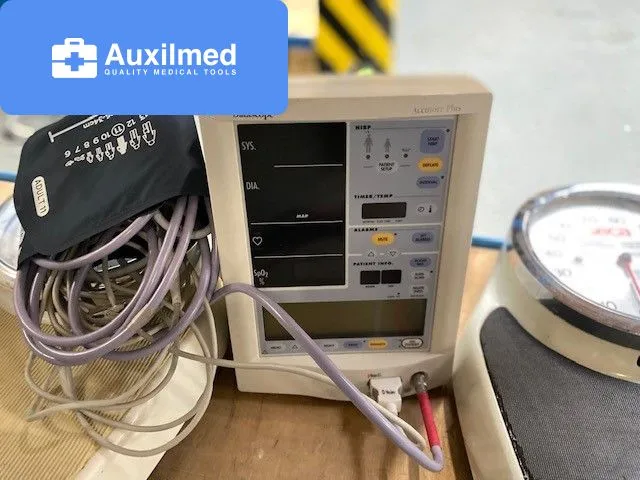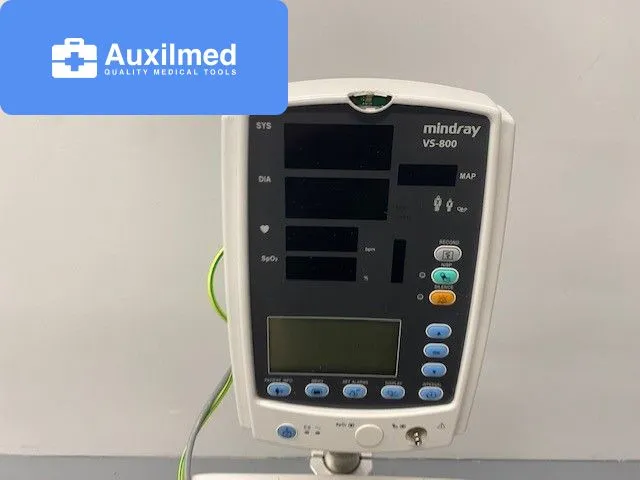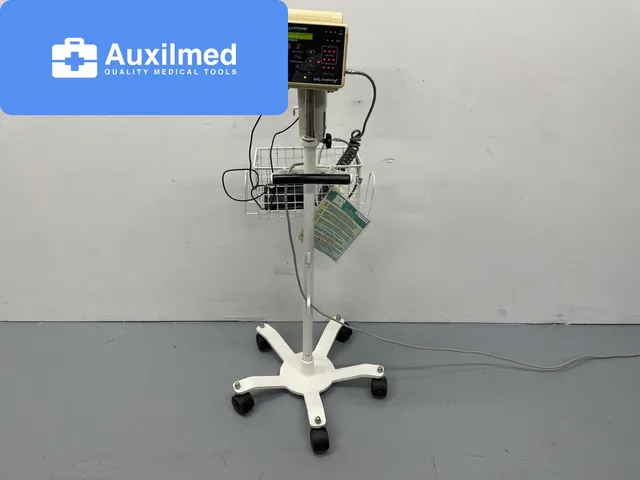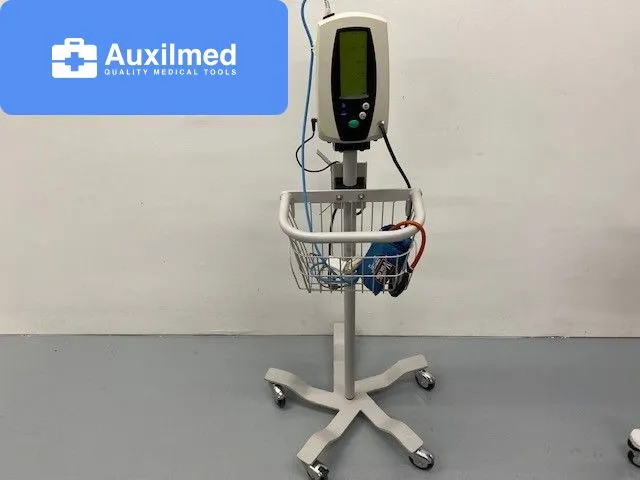
Pulse oximetry estimates arterial oxygen saturation and pulse rate from light absorption at a finger, toe or earlobe. The roughly 41 items in this category are the devices that carry that measurement in practice: dedicated SpO2 monitors, spot-check and continuous vital signs monitors that pair SpO2 with non-invasive blood pressure, and blood pressure instruments listed alongside them. Units come largely from Dutch hospitals, are tested for functionality, and have condition, model, serial number and year of manufacture documented individually.
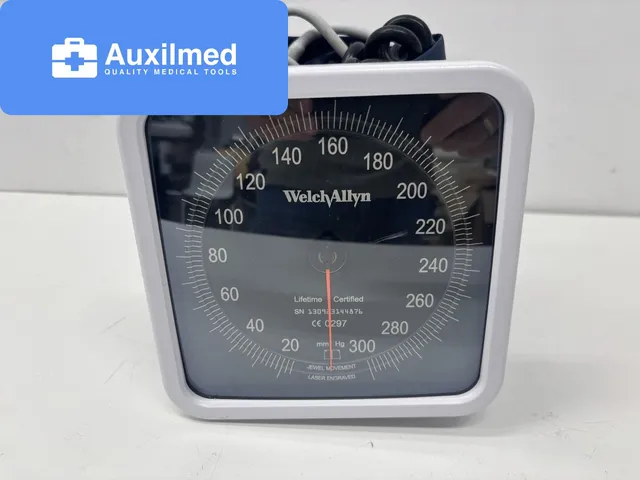
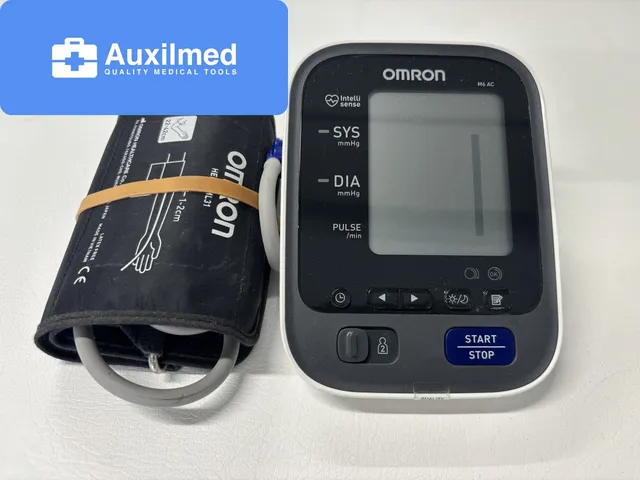
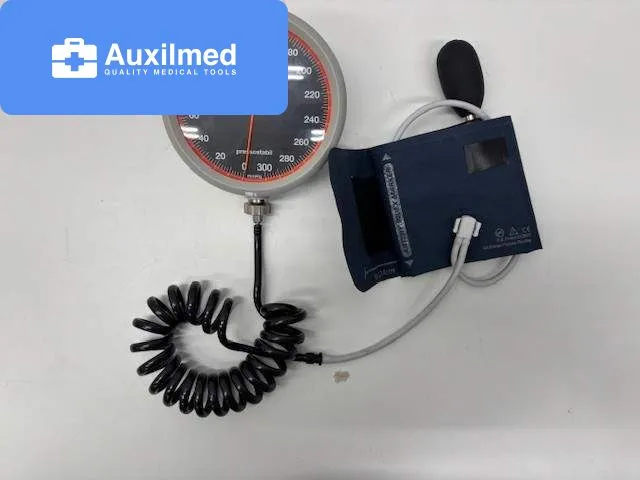
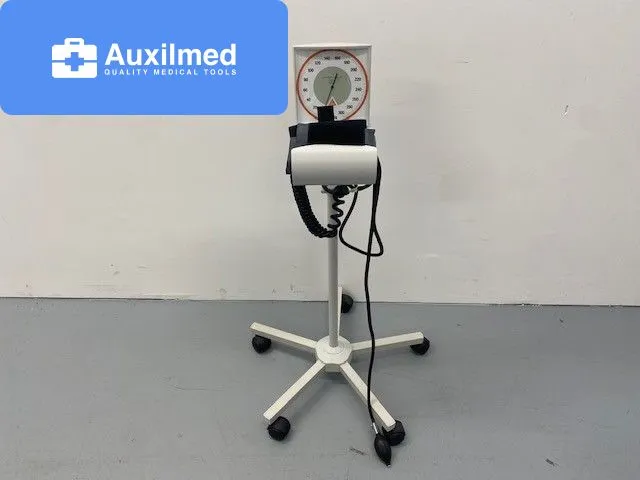
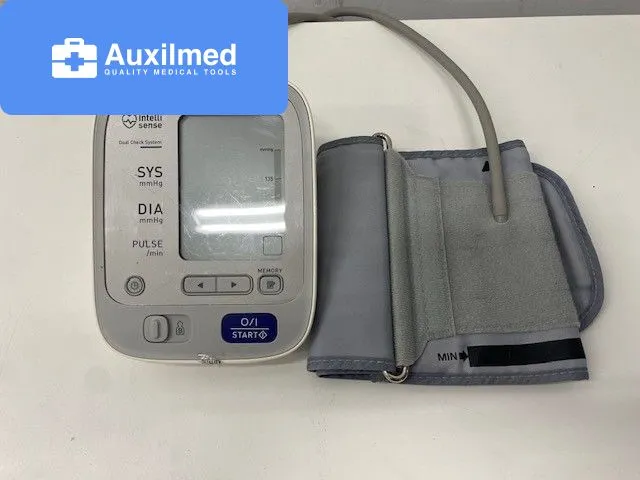
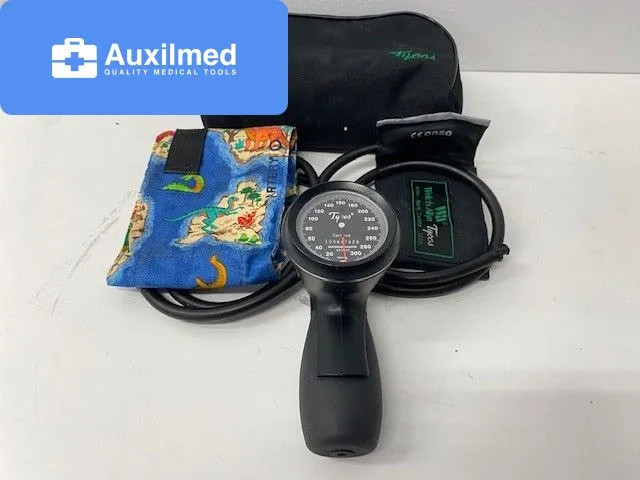
Three overlapping types. Some listings are dedicated saturation monitors that do nothing else. Most are vital signs monitors where SpO2 sits next to non-invasive blood pressure, pulse rate and temperature on one trolley or wall mount. A few are blood pressure instruments only, including manual sphygmomanometers. Read the individual listing to see which parameters a given unit carries, because naming across manufacturers is inconsistent.
| Type | Typical use | What to check first |
|---|---|---|
| Dedicated SpO2 monitor | Bedside or transport saturation and pulse monitoring | Sensor platform and connector family |
| Spot-check vital signs monitor | Ward rounds, triage, pre-assessment | Which parameters are enabled, cuff and hose set |
| Continuous vital signs monitor | Recovery, day surgery, observation | Alarms, trend memory, battery runtime |
| Blood pressure instruments | Automatic or manual NIBP measurement | Cuff sizes, bladder and valve condition, pressure verification |
Because sensors, not consoles, are where the money goes. Oximetry is performed by a licensed measurement engine from one of a small number of developers, and each has its own connector family, reusable and single-patient sensor ranges, and adapter cables. A monitor whose sensor line has been discontinued, or whose connector you cannot source locally, is expensive to run no matter how little the console cost.
Cables and cuffs first, electronics second. Most faults on used oximetry equipment are in the sensor cable near the strain relief, in a cracked emitter or detector window, or in perished NIBP hoses and cuff bladders. All are cheap to put right once identified and expensive to discover after installation. Housing damage from aggressive disinfectants is the next most common finding.
Not in the sense a pressure or temperature device does. The relationship between light absorption and saturation is fixed at manufacture from controlled desaturation studies and cannot be adjusted in the field, so a service check verifies rather than adjusts: an SpO2 simulator confirms that the optics, front end and pulse detection respond correctly, and the probe is inspected. Non-invasive blood pressure is different and does need periodic pressure verification.
A workable acceptance routine before clinical use: verify SpO2 response with a functional tester, verify NIBP against a calibrated pressure meter, check the leak rate of cuff and hose, test alarms at their limits, confirm battery runtime, and have electrical safety testing carried out by a qualified biomedical engineer.
Generally no. Connectors and signal formats are specific to the measurement platform inside the monitor, and a mismatched sensor can produce readings that are wrong rather than obviously absent. Stay within the sensor family the device was designed for, using the manufacturer's adapter cables where a range spans several connectors.
That depends on the individual unit, since these are single machines rather than a stocked product line. The documented configuration for each item states what is present. Send the item reference by wishlist or contact form and the accessory set is confirmed before purchase.